Visuals
The vision
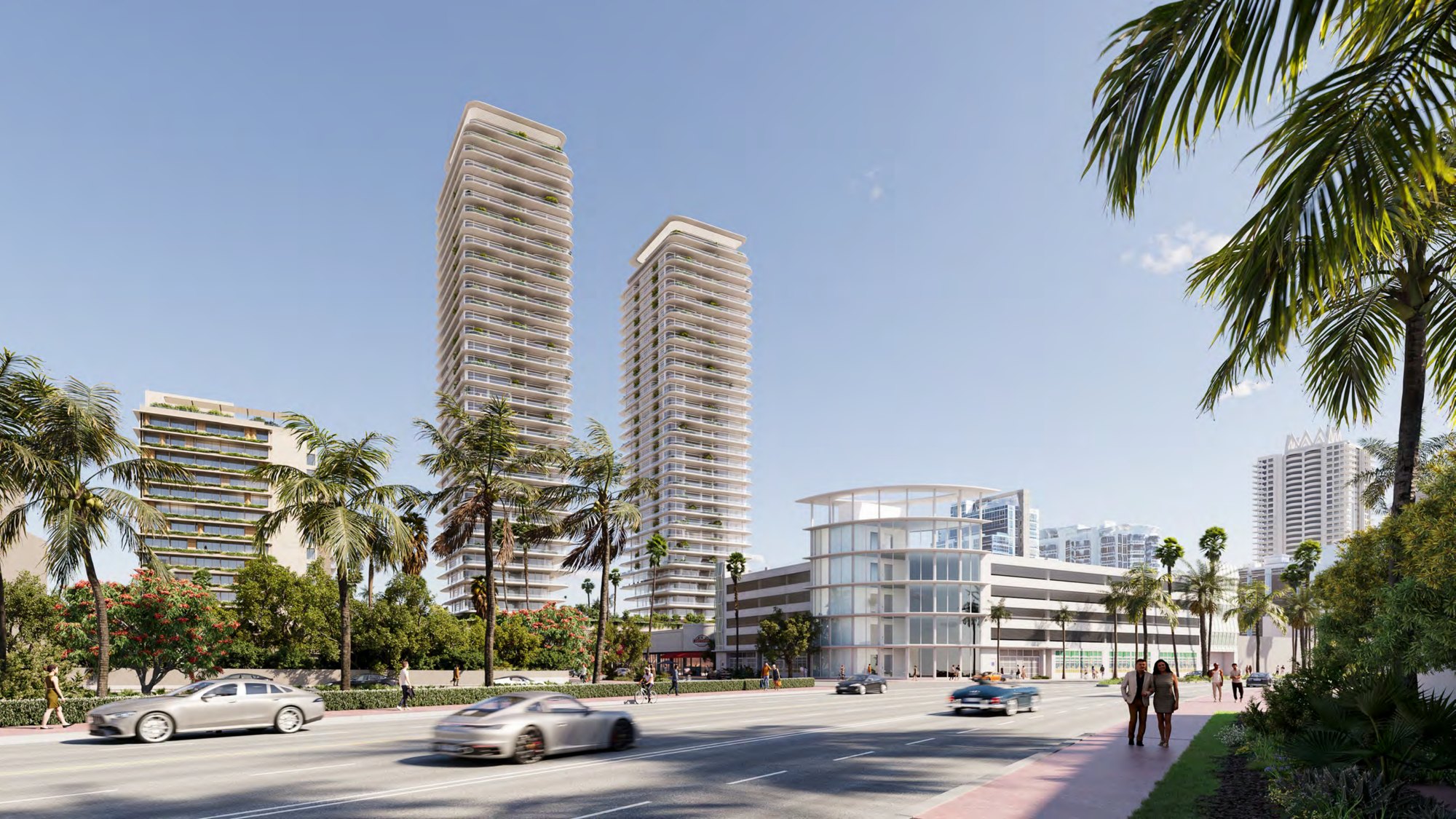
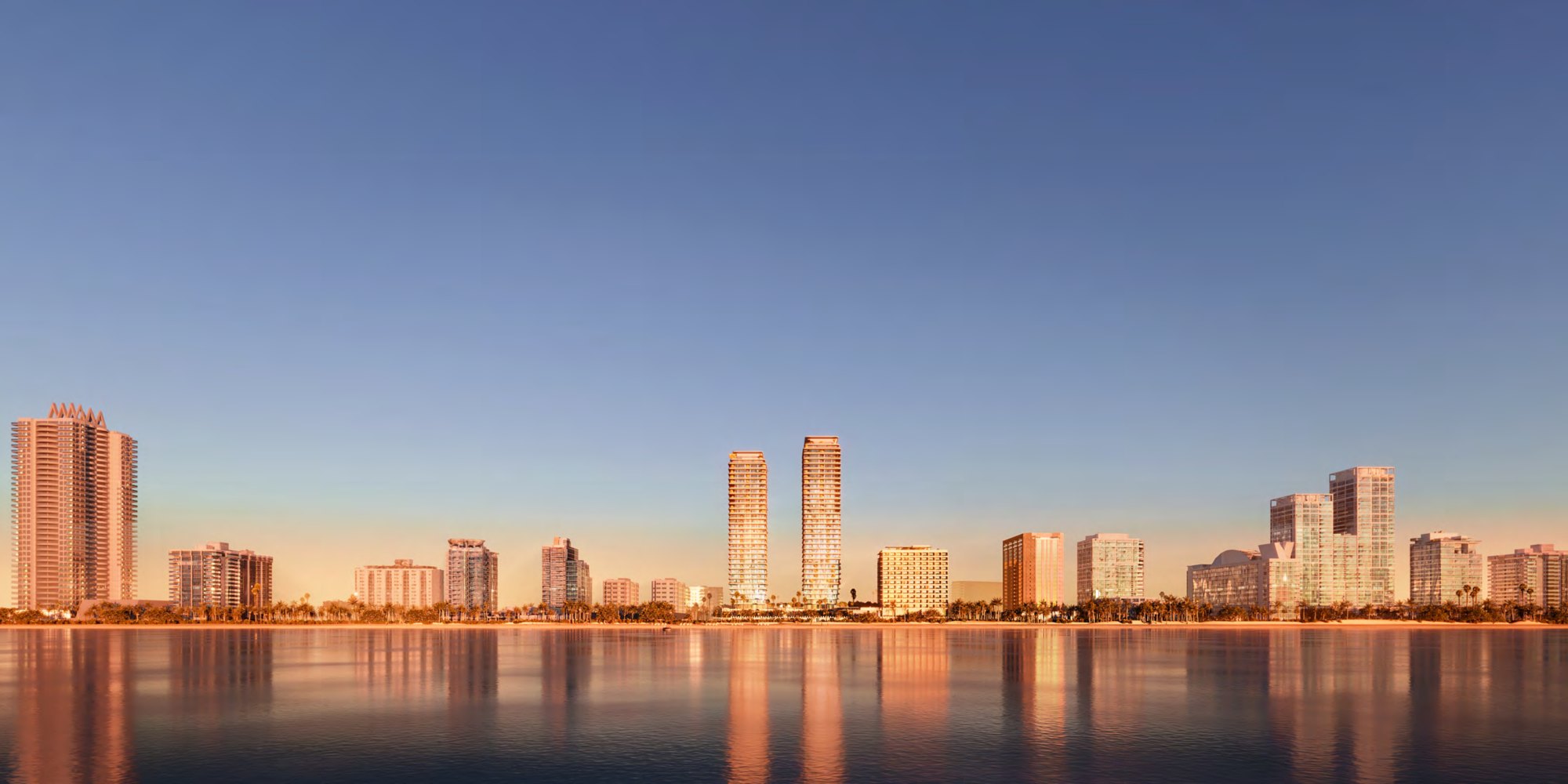


An independent economic and fiscal impact analysis supporting Terra's redevelopment of the historic Deauville Beach Resort site at 6701 Collins Avenue in Miami Beach's North Beach.
The Deauville Beach Resort was one of Miami Beach's most storied landmarks — a 1957 Miami Modern (MiMo) icon that hosted The Beatles' 1964 appearance on The Ed Sullivan Show before years of vacancy left the North Beach site dormant. Following the 2021 Miami Beach voter referendum, Terra advanced a plan to revive the site with a new resort hotel and two condominium towers adding 148 residential units, alongside retail, dining, and public space.
BusinessFlare®, with the Washington Economics Group (WEG), prepared an independent economic and fiscal impact assessment of the redevelopment — measuring the one-time benefits generated during construction and the recurring annual impacts once operational, and modeling the new tax revenue the project generates for the City of Miami Beach and the North Beach Community Redevelopment Agency (CRA).
BusinessFlare® served as the independent economic and fiscal analyst, translating the project's program into rigorous, defensible estimates of jobs, earnings, GDP, and public revenue to support decision-making on a high-profile, publicly approved redevelopment.
The core components of the Deauville economic and fiscal impact assessment.
Originally built in 1957, the Deauville was celebrated for its Miami Modern (MiMo) architecture and mid-century cultural legacy. After a 2017 fire and structural concerns, the hotel closed and the property fell into prolonged vacancy.
The redevelopment reimagines the site as a mixed-use destination — a new resort hotel honoring the original Deauville, two modern condominium towers adding 148 residential units, and retail, dining, and public space designed to re-anchor North Beach.
The study applied an Emsi Type II input-output methodology to quantify the project's direct, indirect, and induced effects across jobs, earnings, GDP (value-added), total output, and tax revenue. One-time impacts were built from construction activity; recurring impacts from ongoing operations and local spending by workers, guests, and residents.
Source data drew on the Bureau of Economic Analysis and the Bureau of Labor Statistics' Quarterly Census of Employment and Wages, grounding the estimates in established public datasets and transparent assumptions.
The construction phase generates an estimated $826.4 million in total economic output, including $466.2 million in contributions to GDP (value-added) and $346.9 million in earnings. It directly creates about 2,894 construction jobs and supports roughly 4,358 total jobs across direct, indirect, and induced effects.
Roughly two-thirds of the jobs are in construction itself, with additional employment in finance, insurance and real estate, professional services, and supporting industries — a wide-reaching, one-time boost to Miami Beach's economy.
Once operational, the redevelopment sustains about 236 permanent jobs and $36 million in recurring annual economic output, producing roughly $11.9 million in annual earnings and $20.5 million in annual GDP contributions — concentrated in hospitality, retail, and property management.
Direct hotel and retail operations sustain about 218 permanent jobs, with indirect supply-chain activity and induced household spending extending the benefit across the broader North Beach economy.
The redevelopment is expected to lift the property's taxable value from $72.3 million in 2024 to an estimated $1.8 billion+ by 2051. City ad valorem taxes grow from about $423,000 in 2024 to roughly $9.1 million by 2031 and $11.6 million by 2051 — a cumulative city total exceeding $284 million over 30 years.
The North Beach CRA receives 60% of net new tax increment — roughly $3.7 million in its first full operating year, growing to about $9 million annually by 2051, a cumulative $284 million+ over 30 years. The project is also projected to generate over $18 million in resort tax over its first 30 years of operation.